How to Combine Email Automation With Travel Expense Tracking

Most travel expenses don’t start in a budgeting app.
They start in your inbox.
Flight confirmations. Hotel bookings. Train tickets. Rental cars. Activity reservations. Almost every meaningful expense arrives first as an email, long before it ever becomes a number you think about tracking.
That gap is where most travel budgets fall apart.
The disconnect between bookings and spending
Travelers usually handle bookings and expenses as two separate things.
Bookings live in email.
Expenses live in a spreadsheet, a notes app, or nowhere at all.
By the time someone tries to understand how much a trip actually cost, the context is gone. Dates are fuzzy. Locations blend together. Some expenses were prepaid, others weren’t. A few were never tracked in the first place.
The result isn’t just missing data. It’s missing understanding.
Email already knows what you paid for
What makes this frustrating is that the information already exists.
Booking emails contain:
- Prices
- Currencies
- Dates
- Locations
- Vendors
- Confirmation details
All the raw material for expense tracking is there, but it’s trapped in messages that were never meant to work together.
Frequent travelers eventually realize that manually re-entering this information isn’t careful planning. It’s unnecessary repetition.
Automation closes the gap early
When booking emails are automatically organized into a trip, something important happens.
Expenses stop being an afterthought.
Instead of trying to reconstruct spending later, costs are captured close to the moment they happen. Flights, hotels, and prepaid activities already live inside the trip, with the right dates and locations attached.
Automation turns email into structure.
Why this changes how expense tracking feels
Most people avoid tracking travel expenses because it feels tedious.
They imagine typing numbers late at night or sorting receipts after the trip. That friction is real, and it’s why expense tracking often gets abandoned halfway through.
When automation handles the repetitive parts, expense tracking becomes lighter.
You’re no longer starting from scratch. You’re adding context to information that already exists.
From confirmations to clarity
Once bookings are automated, expense tracking becomes part of the same flow.
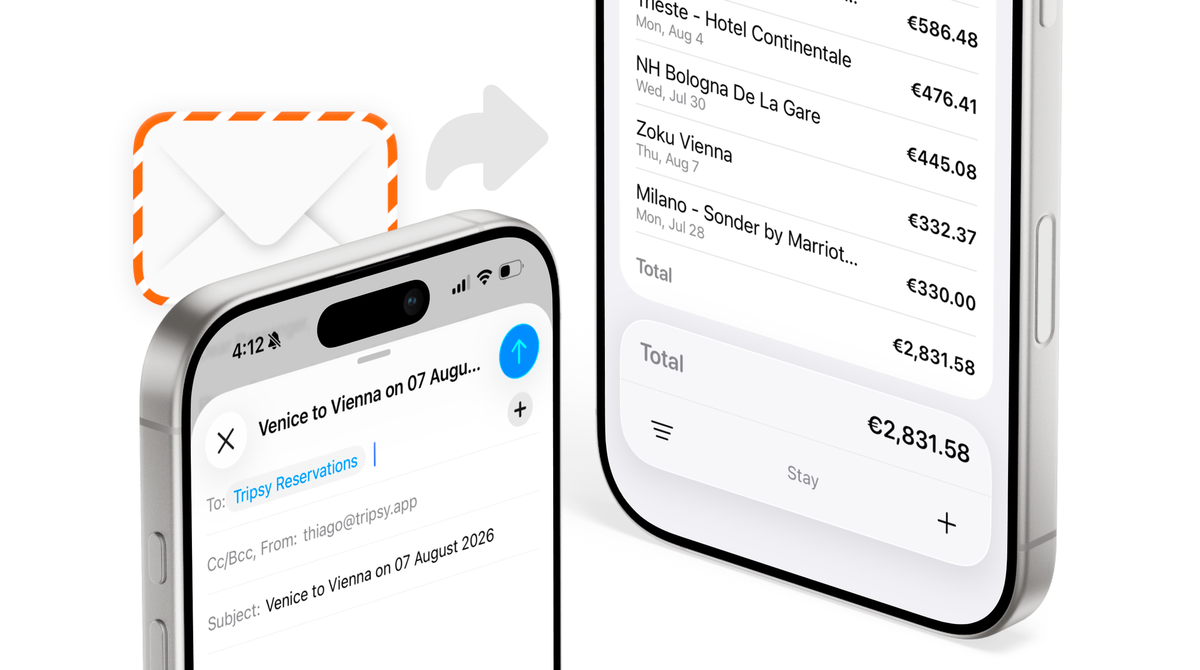
Tripsy connects expenses directly to trips and places. Flights and hotels that arrived via email already belong to the right itinerary. Additional expenses, like meals or transport, naturally fit into the same structure.
Instead of asking “Did I track this?”, you see spending grow alongside the trip itself.
The data stays connected, not scattered.
Seeing spending evolve as the trip unfolds
Combining automation with expense tracking isn’t just useful after the trip.
During travel, it gives you a sense of pace.
You can see how spending is shaping up without digging through statements or guessing. If one part of the trip is running hotter than expected, that information is visible early enough to adjust.
This isn’t about controlling every expense. It’s about avoiding surprises.
One system instead of two
The real benefit of combining email automation with expense tracking is simplicity.
There’s no handoff between tools. No moment where you tell yourself you’ll “deal with expenses later.” The trip stays coherent from booking to return.
Tripsy was designed around this idea. Automation brings bookings into the trip. Expense tracking lives in the same place. Planning, logistics, and spending all reference the same timeline.
And if you want to explore how email forwarding and expense tracking work in more detail, you can tap here to read it all.
Fewer gaps, fewer regrets
Most frustration around travel budgets comes from gaps.
Expenses that were never logged. Bookings you forgot to include. Numbers that don’t quite add up at the end.
Automation reduces those gaps by catching information early, before memory fades or context disappears.
It doesn’t make travel cheaper. It makes it clearer.
A more honest picture of travel costs
When bookings and expenses live together, trips tell a more accurate story.
You’re no longer guessing how much a destination cost or why one trip felt more expensive than another. You can see the relationship between planning decisions and spending outcomes.
Over time, that clarity leads to better planning, better expectations, and fewer post-trip surprises.
Planning and tracking, finally aligned
Email automation and expense tracking solve different problems on their own.
Together, they form a system.
One captures what you booked.
The other shows what it actually cost.
When they’re connected, travel planning stops being fragmented and starts feeling intentional — from the first confirmation email to the moment you look back on the trip.