How to track travel expenses across currencies

Traveling to multiple countries is amazing.
Trying to figure out how much you actually spent afterward? Not so much.
One coffee in euros.
A train ticket in Swiss francs.
A hotel in dollars.
Some cash here and there.
By the end of the trip, most people either:
- Stop tracking completely, or
- End up with a spreadsheet they don’t trust
If that sounds familiar, you’re not alone.
Let’s talk about how to track travel expenses across currencies without overthinking it — and without ruining the trip.
Why this gets messy so fast
Tracking expenses isn’t hard because of math.
It’s hard because of reality.
Here’s what usually happens on a trip:
- You pay in multiple currencies
- Exchange rates change constantly
- Some expenses are on cards, others in cash
- Banks show converted values days later
- You forget what half of the charges were for
So when you finally try to add everything up, the numbers feel… wrong.
The mistake almost everyone makes
This is the big one:
Converting everything to your home currency after the trip
It sounds reasonable — but it breaks down fast.
Why?
- You lose the exchange rate from the day you paid
- Banks apply their own rates and fees
- Cash expenses become guesswork
If you want accurate numbers, there’s only one rule that really matters:
Record expenses in the original currency, at the moment they happen.
Everything else builds on that.
The simple, correct way to do it
1. Save expenses in the original currency
Every expense should be saved as it actually happened.
For example:
- €12.50 — Lunch — Italy
- CHF 48 — Train — Switzerland
- $320 — Hotel — USA
Don’t convert yet. Just capture the truth.
This keeps your data clean and reliable.
2. Let conversions happen automatically
Instead of manually converting numbers (and second-guessing them), use a system that:
- Converts currencies automatically
- Uses historical exchange rates
- Keeps the original amount intact
This way, you can see totals and patterns without losing accuracy.
3. Use a “reference currency” for clarity
Here’s a small trick that makes a big difference.
Pick one currency as your mental anchor — usually your home currency.
Example:
- Spending currencies: EUR, CHF, USD
- Reference currency: USD
You enter expenses in whatever currency you paid, but view totals in your reference currency.
It feels simple. And that’s the point.
Cash: where budgets quietly disappear
Cash is the sneakiest part of travel spending.
Coffee, snacks, buses, tips — they’re small, but they add up fast.
Best habit:
- Record cash expenses immediately
- Don’t wait until the end of the day
- Tag them as cash if you can
A good rule to remember:
If it wasn’t recorded, it didn’t exist — financially speaking.
Totals are nice. Categories are better.
Knowing how much you spent overall is useful.
Knowing where you spent it is far more valuable.
Simple categories go a long way:
- Food & drinks
- Transportation
- Lodging
- Activities
- Shopping
When you look at spending by category (across currencies), patterns jump out:
- “Transport cost more than I expected”
- “Food was cheap, lodging wasn’t”
- “Activities were the real splurge”
That insight helps you plan better next time.
Why spreadsheets usually don’t survive trips
Spreadsheets sound flexible — until you’re actually traveling.
Common problems:
- Manual currency conversions
- Broken formulas
- Bad mobile experience
- No context (trip, location, dates)
They work after the trip.
Travel happens during the trip.
You need something fast, simple, and low-friction.
A travel-first way to handle expenses
Apps built specifically for travel make this much easier.
With Tripsy, for example, you can:
- Log expenses in any currency
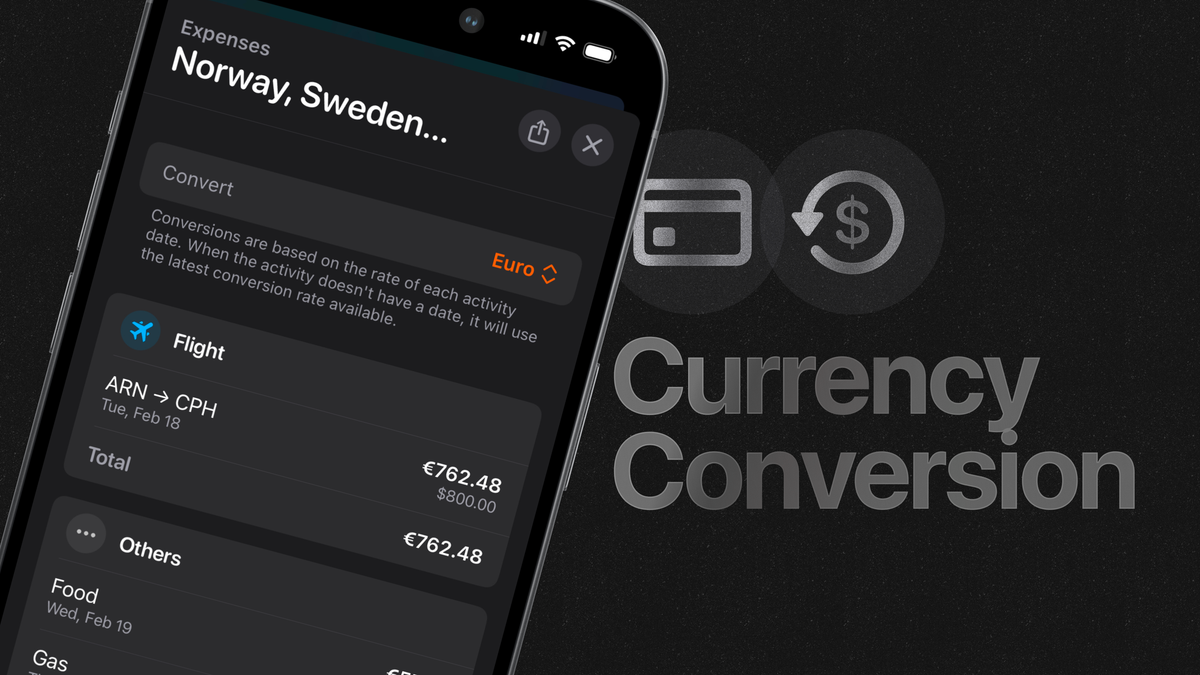
- See automatic conversions
- Group everything by trip
- Track spending by category
- Keep expenses connected to your itinerary
No spreadsheets. No manual math. No guessing later.
Final thoughts
Tracking travel expenses across currencies doesn’t have to be complicated.
If you remember just three things, you’ll already do better than most travelers:
- Always record expenses in the original currency
- Let conversions happen automatically
- Track expenses as they happen — especially cash
Do that, and you’ll come home knowing exactly what the trip cost — and why.